

Soil acidity is one of the most widespread and yield-limiting problems in tropical and subtropical agriculture. Across Southeast Asia, South Asia, and large parts of Africa and Latin America — regions that collectively account for a significant share of global food production — acidic soils constrain crop performance on hundreds of millions of hectares of farmland. The causes are well understood: high rainfall, intensive cropping, nitrogen fertiliser use, and the natural leaching of base cations from topsoil all drive pH downward over time. The solution, equally well understood and practiced for centuries, is the application of calcium- and magnesium-bearing liming materials to neutralise soil acidity and restore the chemical conditions that crops need to thrive.
Dolomite — calcium magnesium carbonate — is one of the most effective and widely used of these liming materials, and for many agricultural applications, particularly where soils are deficient in both calcium and magnesium, it is the superior choice. This guide explains what dolomite is, how it works in the soil, how it compares to alternative liming products, and what buyers sourcing dolomite for large-scale agricultural operations should look for in a supplier.
What Dolomite Is, How Acidic Soils Develop, and What They Cost Farmers
Dolomite is a sedimentary carbonate mineral composed of calcium magnesium carbonate — chemical formula CaMg(CO₃)₂. It forms over geological timescales through the diagenetic alteration of limestone, as magnesium ions replace a portion of the calcium in the original calcite crystal structure. The result is a rock that is chemically and structurally distinct from pure limestone, with a mineral composition that makes it uniquely valuable as a dual-nutrient soil amendment: it supplies both calcium (Ca) and magnesium (Mg) simultaneously, alongside its primary function as a soil pH corrective.
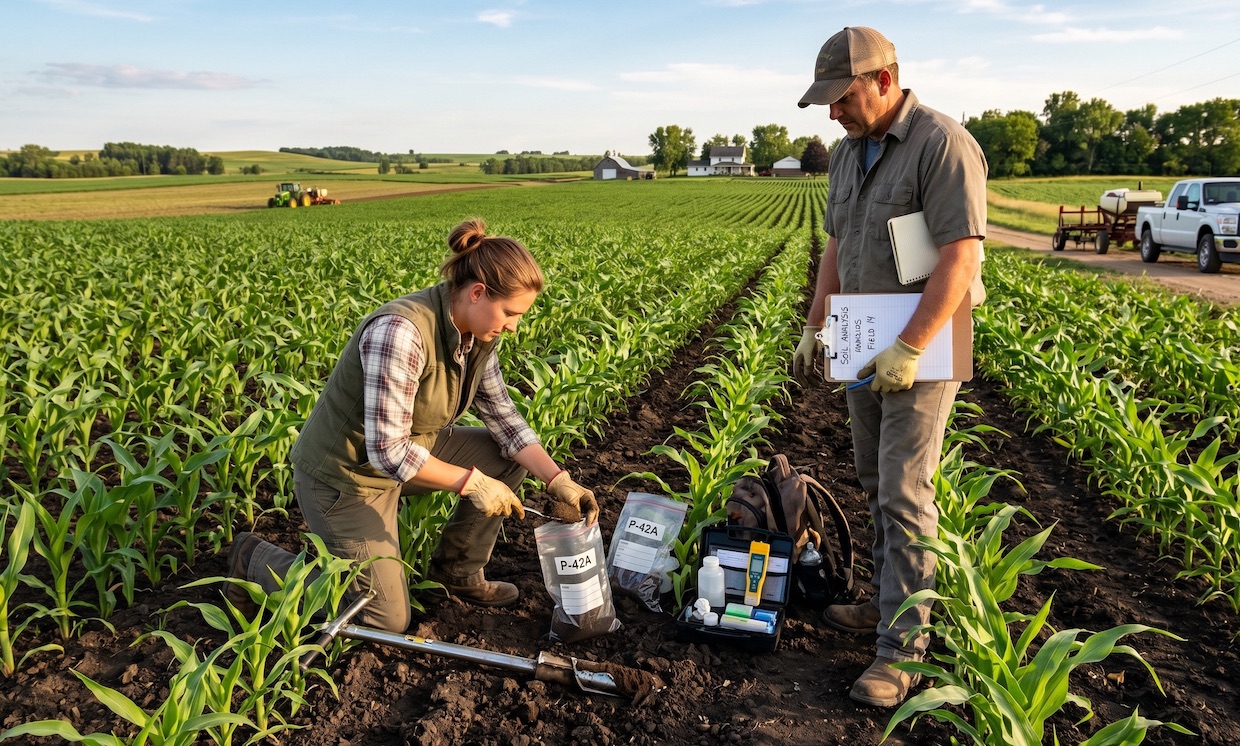
Soil pH — the measure of hydrogen ion concentration in the soil solution — is the single most influential chemical property of agricultural soil because it controls the availability of virtually every plant nutrient. At the optimal pH range for most crops (broadly 6.0 to 7.0 for most field crops; slightly lower for some tropical crops and plantation species), essential nutrients including nitrogen, phosphorus, potassium, calcium, magnesium, and sulphur are all present in their most plant-available forms. As pH drops below 6.0, the chemistry shifts in several harmful directions simultaneously. Phosphorus becomes fixed by aluminium and iron compounds and unavailable to plant roots. Aluminium and manganese, naturally present in most soils, become soluble and accumulate to concentrations that are directly toxic to root systems — stunting root growth, reducing water and nutrient uptake, and causing visible symptoms of toxicity in sensitive crops. Beneficial soil microbial activity, including the nitrogen-fixing bacteria that support legume crops, is suppressed. Molybdenum, essential for nitrogen metabolism in plants, becomes unavailable. The net result is that an acidic soil is, from a plant’s perspective, a chemically hostile environment — and the gap between potential and actual yield in acid-affected fields can be substantial, often exceeding 30–50% for sensitive crops under severe acidity.
The economic stakes for farmers are straightforward. Inputs — seed, fertiliser, irrigation, labour — are applied at cost regardless of soil condition. A soil that is too acidic to allow those inputs to be used efficiently represents both a direct loss and an opportunity cost. Correcting soil acidity with dolomite is, in most situations, among the highest-return investments available to a farmer or estate manager, because it unlocks the full value of every other input being applied.
How Dolomite Raises Soil pH and Supplies Calcium and Magnesium
The mechanism by which dolomite corrects soil acidity is a chemical neutralisation reaction. When dolomite is applied to acidic soil and comes into contact with water, the carbonate component dissolves and dissociates, releasing calcium and magnesium ions and generating bicarbonate and hydroxide ions that consume the excess hydrogen ions responsible for soil acidity. As hydrogen ion concentration decreases, pH rises. The reaction proceeds progressively as the dolomite particles dissolve — which is why particle size is an important quality parameter: finer-ground dolomite dissolves more quickly and produces faster pH correction, while coarser material acts over a longer period and provides residual liming effect. Most agricultural dolomite specifications balance fineness and residual activity to achieve both an initial pH response and sustained buffering over one to three growing seasons.
Beyond pH correction, the calcium and magnesium released by dissolving dolomite serve direct nutritional functions in the crop. Calcium is a structural component of cell walls and a secondary messenger in plant stress responses; deficiency in calcium causes characteristic tip burn in leafy crops, blossom end rot in fruiting crops like tomatoes and capsicums, and tip burn in lettuce and brassicas. Magnesium is the central atom of the chlorophyll molecule and is essential for photosynthesis; it is also required for phosphorus uptake and enzyme activation across a range of metabolic pathways. Magnesium deficiency — characterised by interveinal chlorosis, particularly in older leaves — is common in high-rainfall tropical soils where leaching is intense, and in soils where high potassium fertiliser use has suppressed magnesium uptake through cation competition. Dolomite addresses both deficiencies simultaneously, making it particularly valuable in soils that are acid, calcium-deficient, and magnesium-deficient — a combination that is widespread across the tropical agricultural belt.
Dolomite vs Agricultural Lime: Which Is Better?
Agricultural lime (calcium carbonate, CaCO₃) and dolomite (calcium magnesium carbonate, CaMg(CO₃)₂) are both effective liming materials, and the choice between them depends primarily on the magnesium status of the soil and the crops being grown. Agricultural lime provides calcium only; dolomite provides both calcium and magnesium. In soils that are already adequately supplied with magnesium, agricultural lime is entirely appropriate and is often slightly faster-acting due to its higher calcium carbonate equivalent per unit mass. In soils that are deficient in magnesium — which, as noted above, describes a large proportion of tropical and subtropical agricultural soils — dolomite is the superior choice, because it corrects pH and supplies both required nutrients in a single application, without the need for a separate magnesium amendment.
For plantation crops including oil palm, rubber, and cocoa — which are among the most economically significant crops across Southeast Asia and West Africa — dolomite is widely specified as the preferred liming material because these crops have relatively high magnesium requirements and are grown predominantly on leached tropical soils where magnesium deficiency is endemic. For paddy rice, vegetable cropping, and smallholder mixed farming systems, the choice is more context-dependent and should be guided by soil analysis.

Application Rates, Methods, and Sourcing Quality Dolomite at Scale
Recommended dolomite application rates vary depending on the initial soil pH, the target pH for the crop being grown, the soil’s buffering capacity (which is related to clay and organic matter content), and the calcium magnesium carbonate content and particle size of the dolomite product being used. As a general guide, application rates for field crops on moderately acidic soils (pH 5.0–5.5) typically range from 1 to 3 tonnes per hectare, while more strongly acidic soils or those with high buffering capacity may require 3 to 5 tonnes per hectare or more for initial correction. For plantation crops with high magnesium demand, maintenance applications of 0.5 to 1.5 tonnes per hectare per year are common practice, applied either as a broadcast surface dressing or incorporated into the planting circle or inter-row zone.
The most effective application method for broadacre and plantation use is broadcast spreading followed by incorporation into the topsoil through tillage — where tillage is practiced — to maximise soil contact and accelerate the dissolution and neutralisation reaction. In no-till or minimum-till systems, surface broadcast application is standard, relying on rainfall and biological activity to carry the dissolved carbonate into the soil profile over time. For new planting, particularly in oil palm and rubber establishment, dolomite is frequently applied to the planting hole or ring prior to transplanting to ensure immediate availability to young root systems.
For buyers sourcing dolomite for large-scale agricultural operations — whether for on-farm use on estates and plantations, or for distribution through agricultural input supply networks — product quality and supply consistency are the primary procurement considerations. Key quality parameters to evaluate include calcium magnesium carbonate content (expressed as neutralising value or calcium carbonate equivalent), particle size distribution (which determines dissolution rate and liming effectiveness), moisture content (which affects handling and spreading performance), and the absence of contaminants that could affect soil chemistry or crop safety.
Hasgara International supplies agricultural-grade dolomite to buyers across international markets, providing the product quality and supply reliability that large-scale agricultural operations and input distributors require. With a consistent product specification and an established international trading network, Hasgara is positioned to support buyers with both initial supply qualification and long-term procurement relationships.
To learn more about Hasgara International’s dolomite product specifications and supply options, visit the product page below.
View Dolomite Product Page https://hasgara.sg/products/dolomite/