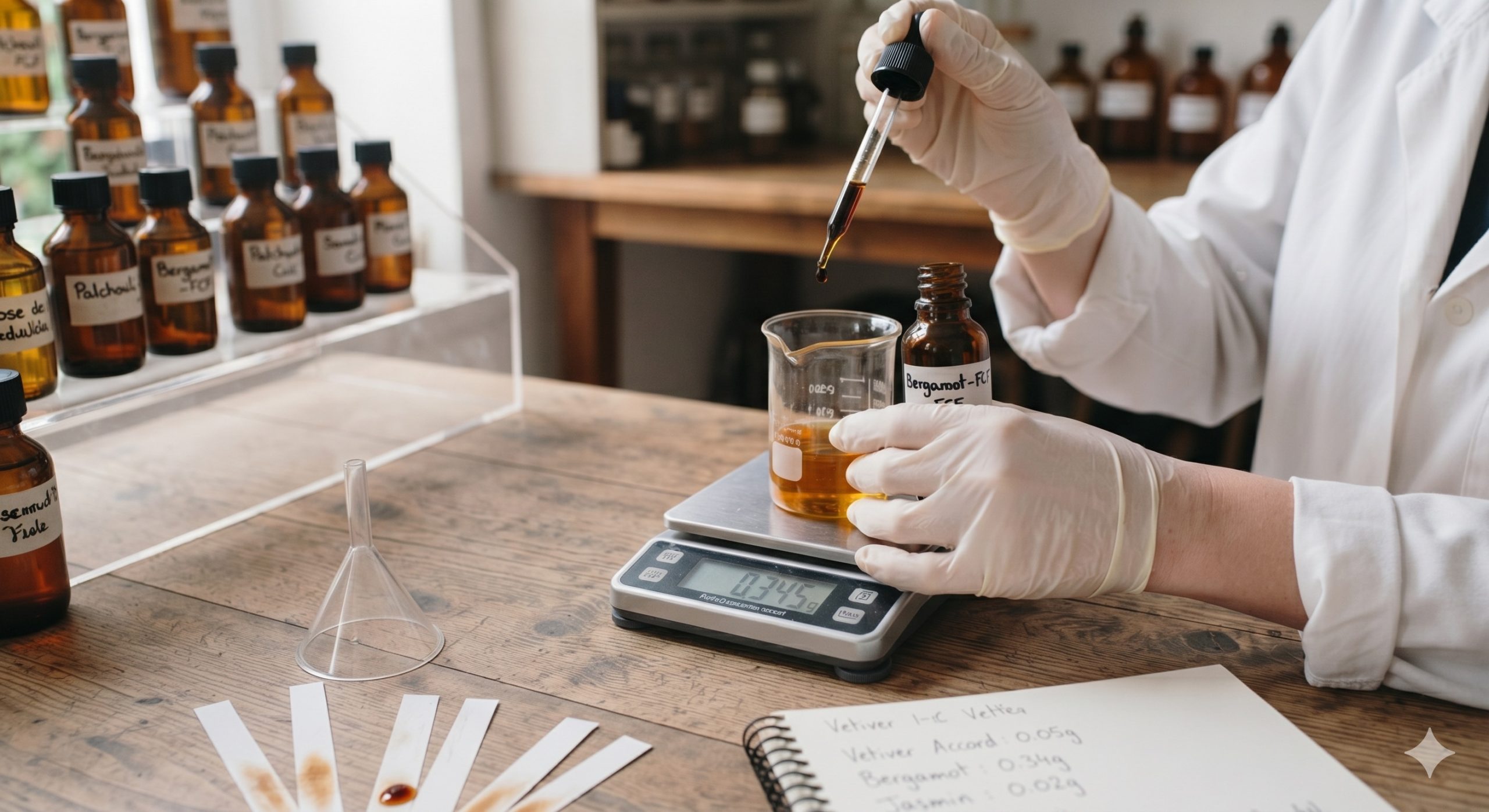
Patchouli oil occupies a position in the fragrance and cosmetics industry that few other natural ingredients can match. It is simultaneously one of the oldest and most continuously traded essential oils in the global market, one of the most technically complex from a formulation standpoint, and one of the most commercially indispensable — present in a significant proportion of prestige fragrances, a wide range of skincare formulations, and a large share of the aromatherapy product category. For formulators working across any of these disciplines, a thorough working knowledge of patchouli oil — its chemistry, its quality markers, its functional properties, and the regulatory environment that governs its use — is not optional background knowledge. It is a core professional competency.
This guide is written for fragrance formulators, cosmetic chemists, and product development teams who work with patchouli oil at a professional level, or who are evaluating it as an ingredient for the first time and need a technically grounded introduction to its properties and applications.
Fragrance Architecture: Why Patchouli Is a Base Note and How It Structures a Composition
The classical framework for understanding fragrance composition divides a perfume into three layers — top notes, middle notes (or heart notes), and base notes — based on the volatility of the aromatic materials and the sequence in which they are perceived after application. Top notes are the most volatile: they create the first impression but dissipate quickly, typically within fifteen to thirty minutes. Middle notes form the core character of the fragrance and are perceived after the top notes have faded, lasting several hours. Base notes are the least volatile materials in the composition — they emerge slowly, anchor the fragrance, and provide the long-lasting dry-down character that lingers on skin and fabric for many hours or even days after application.
Patchouli oil is one of the defining base note materials in perfumery, and its classification in this category is a direct consequence of its chemical composition. The key compound responsible for patchouli’s base note character is patchouli alcohol (patchoulol) — a sesquiterpene alcohol with a large, complex molecular structure that evaporates very slowly at room temperature and body temperature. It is this low volatility that gives patchouli-containing fragrances their characteristic staying power and depth, and it is why patchouli is used not only for its own aromatic contribution but as a fixative — a material that slows the evaporation of more volatile fragrance components and extends the overall longevity of the composition.
In fragrance architecture, patchouli performs several distinct functions depending on how it is used. At higher concentrations — typically 3–10% in the final fragrance formula — it contributes its full aromatic character: earthy, sweet, woody, slightly camphoraceous in fresh oil, and progressively richer and more balsamic in aged oil. At lower concentrations — 0.5–2% — it acts primarily as a fixative and depth-provider, detectable in the dry-down but not dominating the olfactory character of the composition. This versatility makes it useful across a broad range of fragrance families. In oriental and amber fragrances, patchouli is a structural anchor alongside labdanum, benzyl benzoate, and musks. In chypre fragrances — the classical genre built on the accord of bergamot, labdanum, and oakmoss — patchouli is a core component, often substituting partly for oakmoss in modern reformulations necessitated by IFRA restrictions on the latter. In woody fragrances, patchouli provides the earthy, organic dimension that distinguishes natural wood-based compositions from purely synthetic ones. Even in lighter fragrance families — fresh, aquatic, and floral — small amounts of patchouli are routinely used in the base to extend longevity and prevent the fragrance from smelling flat or one-dimensional on dry-down.

Quality Indicators, Skincare Applications, and Blending Compatibility
For formulators evaluating patchouli oil as a raw material, quality assessment begins with the analytical data sheet that a reputable supplier will provide with every batch. The primary quality indicators are as follows.
Patchouli alcohol content is the single most important quality parameter. It is measured by gas chromatography (GC) and expressed as a percentage of the total oil composition. Standard commercial-grade Indonesian patchouli typically shows patchouli alcohol content in the range of 28–32%. Premium grades — particularly aged oils from Aceh province — will show patchouli alcohol above 32%, and exceptional batches can reach 38–40%. Higher patchouli alcohol content correlates with stronger, more complex aroma, better longevity in fragrance applications, and greater functional potency in cosmetic use. For fine fragrance applications, a minimum of 30% patchouli alcohol is a widely accepted threshold; for luxury and prestige fragrance houses, 33–35% minimum specifications are common.
Colour provides a rapid visual indicator of oil age and processing. Fresh patchouli oil is pale yellow to amber in colour. As the oil ages and oxidises, colour deepens progressively to dark amber, brown, and in well-aged oils, a deep mahogany or near-black. In fragrance applications, deeply coloured aged oils are often preferred for their aromatic complexity and depth. In cosmetic formulations — particularly leave-on skincare products where colour migration to packaging or fabric is a concern — lighter, fresher oils may be preferred, or the colour managed through formulation design.
The full GC profile, beyond patchouli alcohol, provides the complete picture of the oil’s chemical composition and is the definitive tool for authenticity verification. Key compounds in addition to patchouli alcohol include norpatchoulenol, alpha-patchoulene, beta-patchoulene, alpha-bulnesene, and seychellene. Adulteration with synthetic patchouli alcohol — a commercially available compound used to boost apparent patchouli alcohol readings without the aromatic complexity of the natural oil — is detectable through the GC profile, as the full suite of sesquiterpene compounds present in genuine steam-distilled oil will be absent or present at anomalous ratios.
In skincare formulations, patchouli oil is used across a range of product categories for both its fragrance contribution and its functional properties. Its anti-inflammatory activity — attributed primarily to patchouli alcohol and other sesquiterpene compounds — makes it a valuable ingredient in formulations targeting sensitive, reactive, and acne-prone skin types. It has demonstrated activity in reducing the production of inflammatory mediators and soothing irritated skin, supporting its use in post-procedure care products, calming serums, and formulations for rosacea-prone skin. Its antibacterial properties support application in acne treatment products, where it can contribute to the management of Cutibacterium acnes and other skin surface bacteria. Patchouli oil also has a documented history of use in supporting wound healing and skin regeneration — applications grounded in traditional Ayurvedic and traditional Chinese medicine practice and supported by contemporary in vitro research on its effects on fibroblast activity and collagen synthesis.
For blending, patchouli oil is exceptionally compatible with a wide range of both natural and synthetic fragrance materials. Its principal natural blending partners include bergamot (which provides citrus brightness that contrasts effectively with patchouli’s earthiness), lavender (which softens and rounds the composition), geranium (which adds a floral-green dimension), frankincense (which complements patchouli’s resinous and meditative qualities), sandalwood (a natural pairing in woody oriental compositions), ylang ylang (for floral depth in oriental fragrances), and clary sage. Among synthetic aroma chemicals, patchouli blends well with musks, ambers, and woody aromachemicals, including iso E super, cedryl acetate, and clearwood, as well as with coumarin in fougère-type compositions.
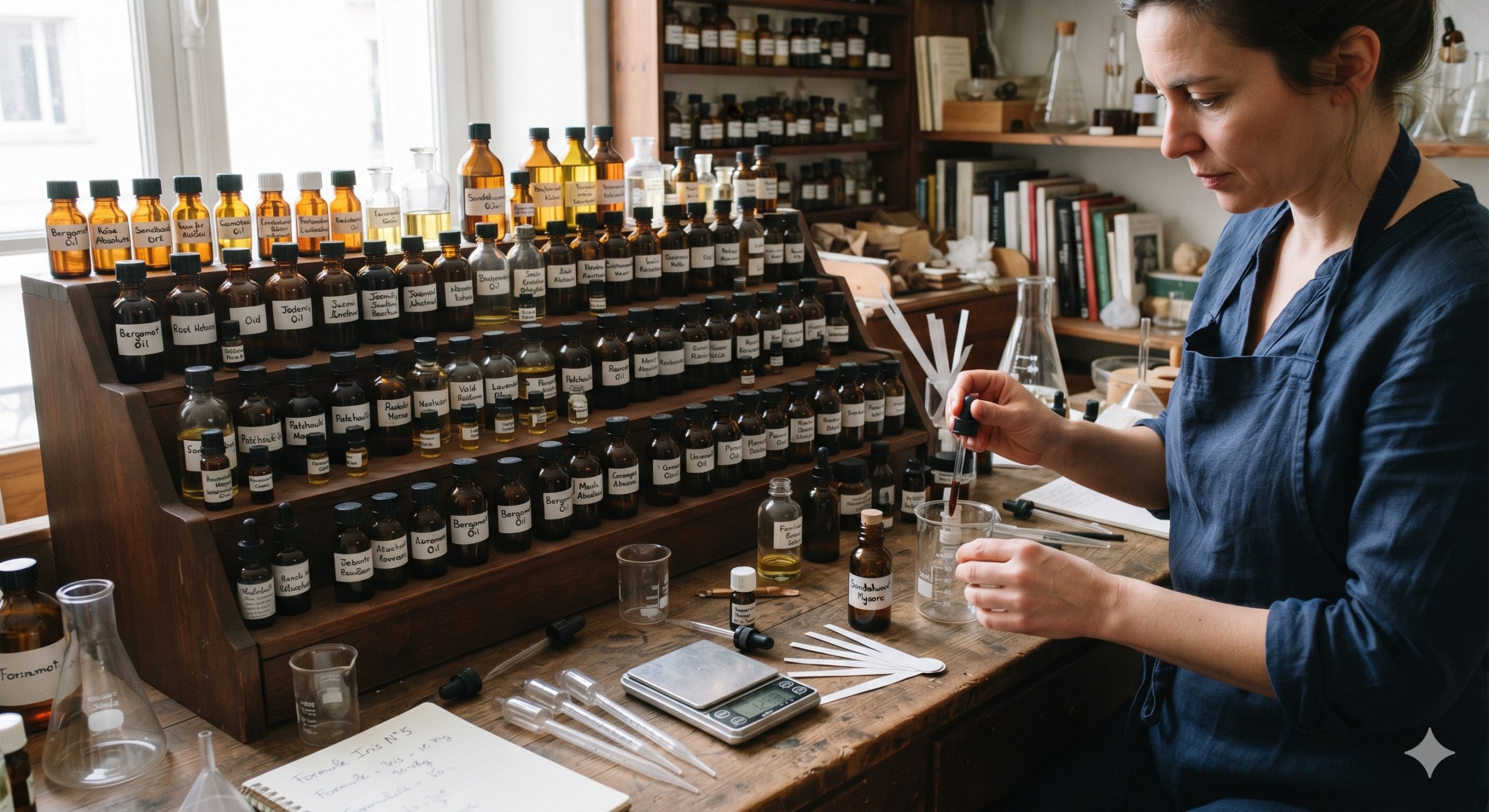
Regulatory Considerations, Compliance, and Sourcing at Scale
The regulatory environment for cosmetic-grade essential oils is increasingly complex, and patchouli oil is not exempt from the compliance requirements that apply to fragrance and cosmetic ingredients in major markets.
IFRA — the International Fragrance Association — publishes usage guidelines for fragrance ingredients in finished products, based on safety assessments conducted by the Research Institute for Fragrance Materials (RIFM). Patchouli oil is listed under IFRA standards, with usage limits that vary by product category — leave-on skin products, rinse-off products, and non-skin-contact applications all have different limits. The current IFRA standards for patchouli oil are relatively permissive compared to many other fragrance materials, reflecting its generally favourable safety profile, but formulators supplying products to markets that require IFRA compliance — which includes most major fragrance and cosmetic brands globally — should verify their formulations against the current IFRA standard version applicable to their target market.
In the European Union, cosmetic ingredients are governed by the EU Cosmetics Regulation (EC 1223/2009), which requires all cosmetic products placed on the EU market to undergo a safety assessment and to comply with ingredient listing and labelling requirements. Patchouli oil contains several compounds that are classified as potential skin sensitisers under EU regulations and must be declared on product labels when present above specified threshold concentrations — a requirement that applies regardless of whether the patchouli is present for fragrance or functional purposes. REACH (Registration, Evaluation, Authorisation and Restriction of Chemicals) compliance is a further consideration for suppliers and importers of patchouli oil into the EU, requiring appropriate registration and safety documentation for chemical substances placed on the EU market above specified volume thresholds.
For buyers sourcing patchouli oil at production scale — fragrance houses, cosmetic ingredient distributors, and contract manufacturers supplying to regulated markets — working with a supplier who provides complete regulatory documentation as standard is not a preference but a supply chain necessity. This includes GC analysis certificates, material safety data sheets (MSDS/SDS), IFRA conformity certificates for fragrance applications, country-of-origin documentation, and, where relevant, organic certification or fair-trade documentation for brands whose product positioning requires these credentials.
Hasgara International supplies premium Indonesian patchouli oil to professional buyers in the fragrance, cosmetics, and essential oil industries, providing consistent analytical documentation and the supply reliability that production-scale procurement requires. Whether you are qualifying a new patchouli source, scaling up an existing formulation, or seeking a long-term supply partner for a key fragrance ingredient, Hasgara provides the product quality and documentation standards that professional buyers expect.