

A decade ago, emission compliance was a concern primarily for vehicle manufacturers and their engineering teams. Fleet operators and industrial buyers could, in many markets, treat emission standards as background regulatory context — important in principle, but rarely the subject of day-to-day operational decisions. That period is over. Across road transport, maritime shipping, and industrial power generation, the regulatory environment governing exhaust emissions has tightened substantially, enforcement has intensified, and the commercial consequences of non-compliance have become direct, immediate, and financially material.
For fleet managers, procurement directors, vessel operators, and industrial plant managers, emission compliance is no longer a compliance department problem that gets resolved somewhere upstream. It is an operational and procurement responsibility — one that requires understanding what the regulations actually require, what the real business risks of falling short are, and what a sound sourcing strategy for emission control products looks like. This guide addresses all three.
The Global Regulatory Trajectory: How Far Standards Have Come and Where They Are Going
The evolution of emission standards over the past two decades has followed a consistent trajectory in every major market: tighter limits, broader scope, and more rigorous enforcement. Understanding where the regulatory environment stands today — and where it is heading — is the starting point for any serious compliance strategy.
On road transport, the Euro emission standard framework established by the European Union has set the global template. Euro 4, introduced for heavy-duty vehicles in 2005, set a NOx limit of 3.5 g/kWh. Euro 5, which followed in 2008, cut that to 2.0 g/kWh. Euro 6, in force since 2013 and progressively strengthened through subsequent sub-stages, brought the limit to 0.4 g/kWh — a reduction of over 88% from Euro 4. These are not marginal adjustments. They represent a fundamental transformation of what diesel engine technology is required to deliver, and Selective Catalytic Reduction (SCR) combined with AdBlue (AUS32) is the after-treatment solution that makes compliance technically achievable at Euro 6 levels.
The reach of this framework extends far beyond Europe. Singapore adopted Euro 6 equivalent standards for new heavy vehicles. Indonesia is advancing through its own Euro equivalent transition, with Euro 4 already in force for new passenger cars and light commercial vehicles and Euro 6 on the roadmap for heavy-duty applications. India implemented Bharat Stage VI — equivalent to Euro 6 — in April 2020 across all vehicle categories. China rolled out China 6 standards, among the most stringent in the world, from 2020 onwards. The Gulf Cooperation Council countries have adopted Euro 5 equivalent standards, with Euro 6 alignment under active consideration. The direction of travel is uniform and irreversible: every significant vehicle market in Asia, the Middle East, and beyond is on a regulatory trajectory that makes SCR technology and AdBlue supply a permanent operational requirement for commercial diesel fleets.
In the maritime sector, the IMO Tier III standard — requiring an approximately 80% reduction in NOx emissions compared to Tier I for vessels operating in designated Emission Control Areas — has been in force since 2016 for new vessel construction. Current Tier III ECAs cover the North American coast, the US Caribbean Sea, the North Sea, and the Baltic Sea. The Mediterranean Sea is under active consideration for Tier III ECA designation, as are domestic ECA zones in several Asian countries including China, which already operates its own coastal ECA framework. The pattern mirrors road transport: progressive tightening, geographic expansion, and increasing enforcement rigour at port state control level.
Looking further ahead, the IMO’s 2050 decarbonisation strategy and the growing adoption of carbon pricing mechanisms in shipping will add further regulatory layers on top of existing NOx standards. For vessel operators making fleet investment decisions today, compliance with current NOx requirements via SCR and AUS40 is the near-term operational priority — but it sits within a longer-term regulatory trajectory that is only moving in one direction.
The Real Business Risks of Non-Compliance
The business risks of emission non-compliance are not theoretical. They are operational, financial, and reputational — and they materialise in specific, predictable ways that decision-makers can and should factor into their compliance investment calculus.
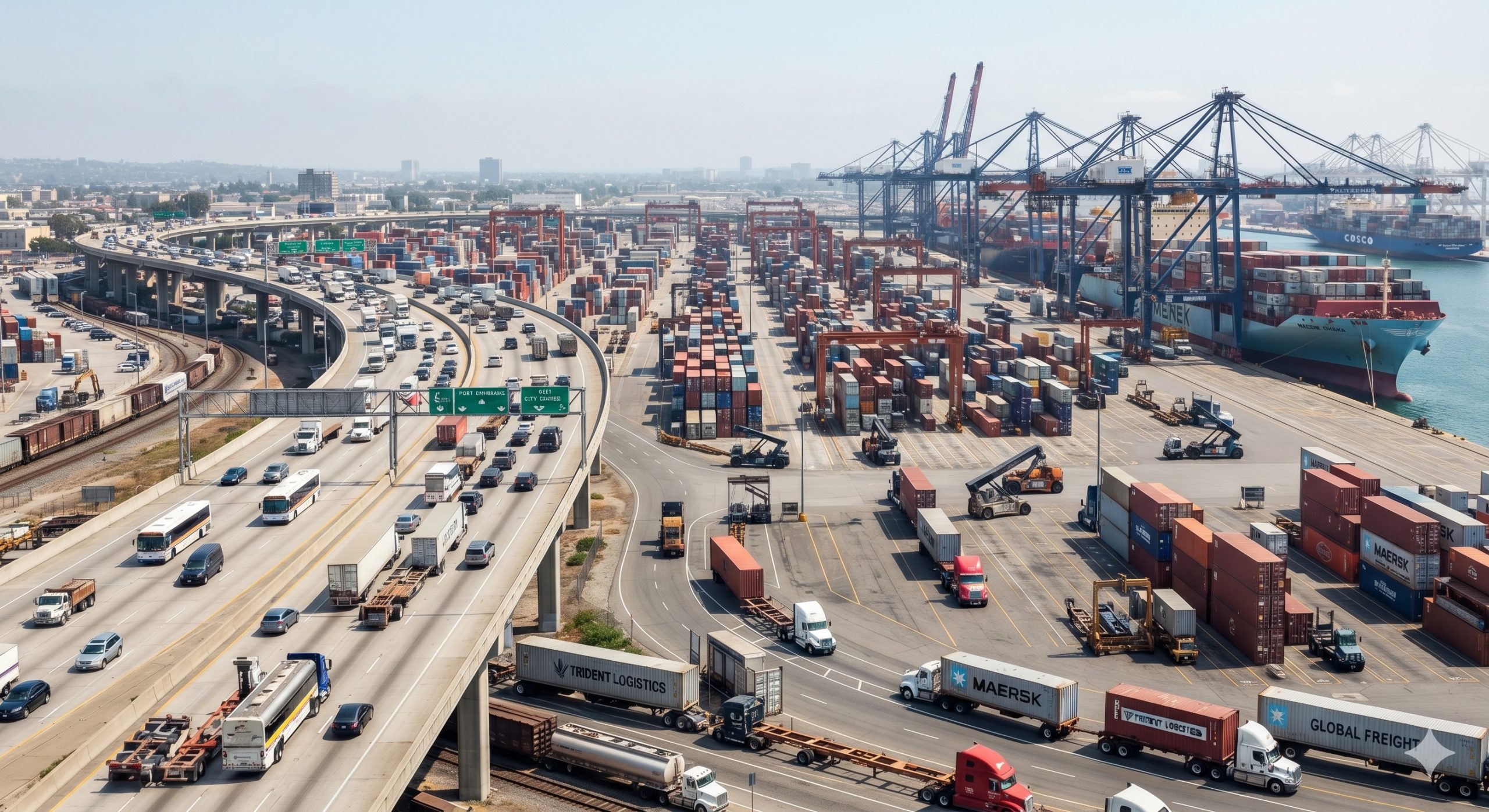
For road fleet operators, the most immediate risk is vehicle grounding. In markets with active roadside emission enforcement — including the UK, Germany, and a growing number of Asian and Middle Eastern markets — vehicles found to be operating with a malfunctioning or tampered SCR system, or with insufficient or non-compliant AdBlue, can be prohibited from operating until the issue is resolved. A single grounded vehicle in a time-critical logistics operation triggers a cascade of downstream consequences: missed delivery windows, contractual penalty clauses, emergency subcontracting costs, and customer relationship damage that can outlast the immediate incident. Multiplied across multiple vehicles or repeated incidents within a fleet, the cumulative financial exposure from grounding events far exceeds the cost of maintaining a properly managed AdBlue supply programme.
In tendering for logistics contracts with major shippers, retailers, and government agencies — a competitive procurement environment in which sustainability and compliance credentials are increasingly weighted alongside price — documented fleet compliance with current emission standards is moving from a preferred attribute to a contract qualification requirement. Fleets that cannot demonstrate Euro 6 compliance and a credible AdBlue supply chain are progressively excluded from tendering for the contracts that represent the growth end of the logistics market.
For vessel operators, the consequences of non-compliance in Tier III ECAs are enforced through port state control — the system by which port authorities in signatory countries inspect vessels to verify compliance with international maritime conventions. A port state control deficiency for non-compliance with NOx Tier III requirements can result in vessel detention — the vessel is prohibited from departing until the deficiency is rectified. In a commercial shipping context, detention means demurrage costs, charter party penalties, cargo claims from shippers, and in severe cases, reputational damage with charterers and P&I clubs that affects future employment and insurance terms. The cost of a single detention event routinely exceeds the cost of a year’s AUS40 supply for the vessel concerned.
Beyond direct enforcement, there is an emerging dimension of commercial risk associated with emission non-compliance that operates through supply chain relationships rather than regulatory channels. Large cargo owners — particularly consumer goods companies, retailers, and manufacturers with public ESG commitments — are increasingly including emission compliance requirements in their freight procurement standards and shipper of choice programmes. Carriers and logistics providers that cannot demonstrate compliance with applicable emission standards risk losing access to the cargo flows that define their commercial position.
AdBlue, AUS40, and Why Certification De-Risks Procurement
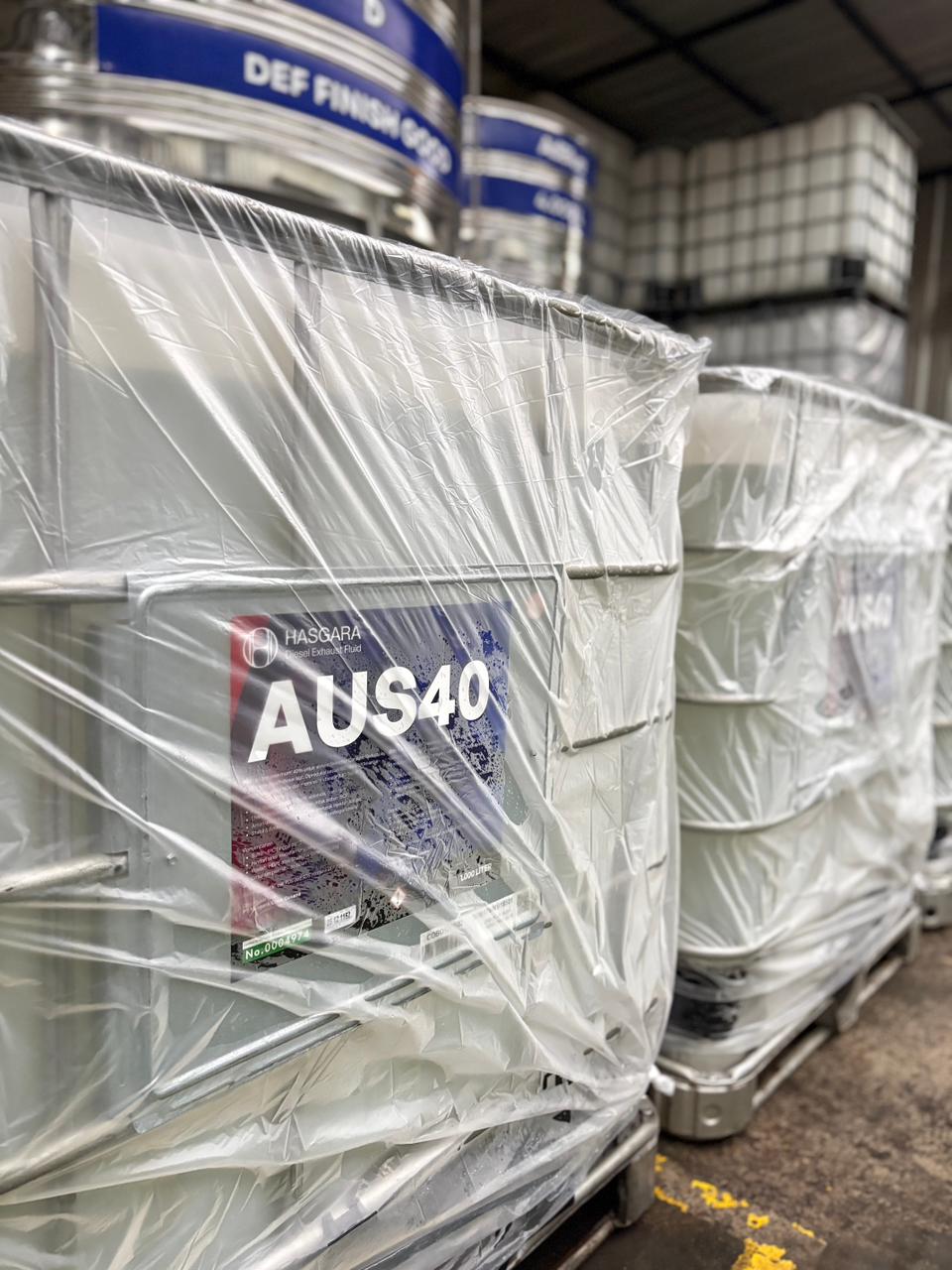
The practical solution to SCR compliance across both road and maritime applications is straightforward in principle: ensure a continuous, reliable supply of correctly specified, certified emission control fluid — AdBlue (AUS32) for road vehicles, AUS40 for marine engines — from a supplier whose product quality is independently verified and documented.
The word “certified” is doing important work in that sentence. Not all AdBlue and AUS40 products on the market meet the same quality standard, and the consequences of using substandard or off-specification fluid are severe: SCR catalyst damage, injector fouling, system faults, potential warranty voidance, and — most critically from a compliance standpoint — failure to achieve the NOx reduction required to meet the applicable emission standard. A vehicle or vessel that is running AdBlue or AUS40 but still failing its emission target because the fluid is diluted or contaminated is not compliant, regardless of what the procurement record shows.
ISO 22241-1 certification for AdBlue (AUS32) and the equivalent quality standards for AUS40 define the technical specification that the fluid must meet to perform correctly in SCR systems. These specifications cover urea concentration, purity, pH, density, and a comprehensive set of trace contaminant limits. Independent certification against these standards — through accredited third-party testing — is the mechanism by which a buyer can verify that the product they are purchasing will actually deliver the emission performance their vehicles and vessels require.
Certification by Verband der Automobilindustrie — the quality standard associated with the German automotive industry and referenced by European truck and engine OEMs — provides an additional and highly credible layer of quality assurance for AdBlue procurement. Suppliers certified by Verband der Automobilindustrie have had their manufacturing processes, quality management systems, and product testing protocols assessed against the applicable standards for AdBlue used in vehicles. For fleet procurement teams, being supplied by a company certified by Verband der Automobilindustrie provides a strong third-party indicator that the product is manufactured in accordance with established quality requirements and is suitable for its intended SCR applications.
Hasgara International’s AdBlue (AUS32) is certified by Verband der Automobilindustrie and complies with ISO 22241-1. Combined with Hasgara’s AUS40 supply for maritime applications, this provides fleet operators and vessel owners with a single-source supply solution for their emission control fluid requirements — supported by quality documentation and supply reliability for effective compliance management.
For procurement teams building a sourcing strategy around emission compliance, the guiding principle should be that product quality and supply reliability are not separable considerations. A supplier with excellent product quality but unreliable delivery creates compliance risk through supply interruption. A supplier with reliable delivery but unverified product quality creates compliance risk through fluid performance failure. The procurement outcome that actually de-risks compliance is consistent supply of certified product — and that requires a supplier with both credentials, not one or the other.
Hasgara International operates as a global trading company with an established supply network across Asia and international markets, supplying AdBlue (AUS32) and AUS40 to commercial fleet operators, maritime companies, and industrial buyers who require the combination of certified product quality, supply continuity, and professional documentation that compliance-focused procurement demands. As emission regulations tighten further and enforcement intensifies across road and maritime sectors, the value of a trusted, certified supply relationship only increases.
To learn more about Hasgara International’s AdBlue (AUS32) and AUS40 products and supply capabilities, visit the product pages below.
→ View AdBlue (AUS32) Product Page
https://hasgara.sg/products/adblue-aus32/
→ View AUS40 Product Page
https://hasgara.sg/products/aus40/